
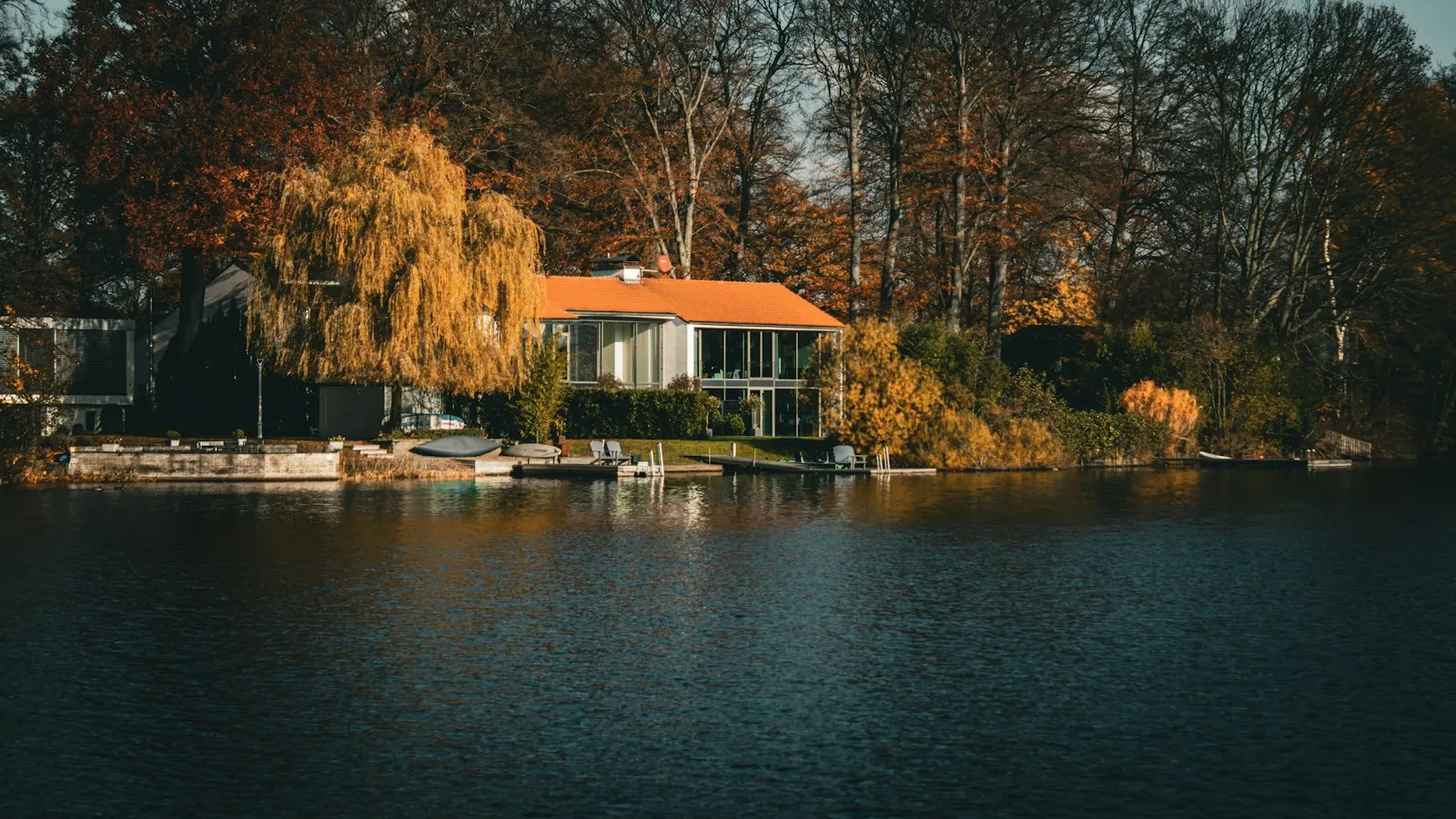
We have lived on Lake Wedowee full-time since we moved here as empty nesters, and Terry has shown waterfront by boat since he got his license in 2009. Over that time we have settled on a short list of questions we ask about every lakefront home before a client gets serious. Most of them are particular to this lake, which Alabama Power officially calls R.L. Harris Reservoir (Harris Lake), and which everyone around here calls Lake Wedowee.
None of these is a deal killer by itself. But the answers change what a property is worth, what it costs to own, and whether it fits the way you plan to use it.
1. How much water is at the dock at winter pool?
This is the first question, and it is the one out-of-town buyers rarely think to ask. Lake Wedowee is not a constant-level lake. Alabama Power holds it at a full pool of 793 feet above sea level in the summer and lowers it to a winter pool of 785 feet in the fall. In the 2024 schedule Alabama Power published, the drawdown began October 1 and was expected to reach winter pool by November 30. Alabama Power publishes the schedule each year, so confirm the current dates before you rely on them. The lake generally starts coming back up around April 1.
Eight feet of drop is a lot. A dock that floats in twelve feet of water in July may be sitting in four feet in December, and a dock with six feet in July may be sitting on mud. If you plan to keep a boat in the water year-round, the winter depth matters more than the summer depth.
Terry checks this on the showing. If you are looking in summer, he will tell you honestly what he expects the spot to look like at 785. If you are looking between December and March, you can see it for yourself, which is one reason winter is a good time to shop for waterfront.
2. Does the dock have a valid Alabama Power permit, and will it transfer?
Every dock, pier, boathouse, and seawall on this lake sits on land Alabama Power owns, and each one needs a written permit from Alabama Power. That is not a formality. Alabama Power’s residential shoreline guidelines for Harris say a written permit must be obtained before any construction, repair, or modification on Alabama Power’s property, and that verbal approval is not sufficient.
The part buyers miss is that the permit does not automatically come with the house. The same guidelines say the permit is personal to the permittee and non-transferable without Alabama Power’s written consent, and that a seller is supposed to notify Alabama Power in writing at least seven days before transferring the property. We ask the seller for a copy of the permit, look for the permit tag, and build time into the contract to handle the transfer with the shoreline office in Wedowee. If the seller cannot produce a permit, you want to know before you make an offer. We cover size limits and fees in a separate article on docks and shoreline permits.
3. Where do the 795 and 800 lines fall on the lot?
On Lake Wedowee, “waterfront” does not mean you own to the water. According to Alabama Power’s guidelines, Alabama Power owns the land in fee up to the 795 foot contour, and it holds a scenic easement up to the 800 foot contour (or, in certain areas, 50 linear feet back from the 793 foot line). Your deed generally starts at 795.
Why does this matter? Because the strip between the water and your property line is where people want to put things: a fire pit, a retaining wall, a shed, sod. The guidelines restrict what can happen inside the scenic easement, including changing the contour of the land, seeding grass, building fences or wells, removing trees over three inches in diameter, and clearing shrubs over four feet tall. If a seller has done any of that, ask whether Alabama Power approved it.
A survey that shows the 795 and 800 contours is the best tool here. If the seller does not have one, it may be worth ordering during your inspection period, especially on a steep lot where those lines can sit closer to the house than you expect.
4. How old is the septic system, and what is it rated for?
There is no public sewer along most of the lake. In our experience nearly every lake home here is on a private septic system, and we treat that as a normal part of the inspection, not a red flag. The Alabama Department of Public Health handles onsite sewage permits in Randolph County, and the state’s guidance for buyers says that before purchasing land you should check with the local health department about sewer availability and soil suitability.
The questions we ask: When was the system installed? When was it last pumped? How many bedrooms was it permitted for? That last one matters if you plan to add a bunkroom or finish a basement. A septic inspection is a small cost compared to a replacement, and we recommend one on almost every lake purchase.
5. What kind of shoreline is it?
Shorelines here come in three general types: natural bank, rip-rap (placed stone), and seawall. Natural shoreline looks the best and costs nothing until it starts to erode. Rip-rap is what Alabama Power prefers for bank stabilization and generally holds up well. Seawalls are evaluated by Alabama Power case by case, and older ones can be hard to fix because any substantial repair needs its own permit.
On the boat, Terry looks at the bank at the waterline and, if the lake is down, what is exposed below it. Undercut banks, leaning trees, and cracked or bowing seawalls are the things to note. They are not unusual, but they are costs.
6. Which arm of the lake is it on, and how far from the dam?
Lake Wedowee is fed by two rivers, the Big Tallapoosa and the Little Tallapoosa, which come together near Alabama Highway 48. South of that, the lake widens out for roughly ten miles down to the dam. The Outdoor Alabama reservoir page describes the same layout, with the two rivers merging about 8.5 river miles above the dam.
Where a property sits on that map affects almost everything else on this list. The lower lake near the dam is wider and deeper and tends to hold water better at winter pool. The river arms are narrower and quieter, but the same feature story notes that at winter pool some of the upper river reaches become shallow. Neither is better. They are different, and we want you to see both before you decide.
7. How do you get there by road, and who maintains the road?
A house can be twenty minutes from town by boat and forty by car. We drive the route with clients, because the last mile matters: is it a paved county road, gravel, or a private drive maintained by the neighbors? Randolph County’s Highway Department is the office for questions about county-maintained roads. For a private road, ask who pays for grading and gravel and whether there is a written agreement. Steep drives are common here, and they matter on the few icy days we get each year.
8. What are the internet and cell service actually like?
We are not going to make claims here, because coverage varies from cove to cove and changes as providers build out. Test it in person. Stand on the dock and make a call on your own phone. Ask the seller who their internet provider is and what speed they get. If you plan to work from the lake, bring a laptop to the second showing and run a speed test. Five minutes will tell you more than anything we could write.
9. Is the house in a flood zone, and what is the flood insurance situation?
Most lake homes here sit well above the 800 foot line, but some older cabins and low lots do not, and a lender will require flood insurance if the home is in a special flood hazard area. You can look up a property’s flood map at the FEMA Flood Map Service Center.
One thing to watch: the National Flood Insurance Program runs on short-term extensions from Congress. As of this writing, its authority is set to expire December 11, 2026 unless extended again. During a lapse the program cannot issue new policies, though a seller’s existing policy can generally be assigned to the buyer. If your purchase needs flood insurance, we build that into the timeline and talk to the lender early.
10. Are there covenants or an HOA?
Some lake subdivisions have recorded covenants and an active association; many older areas have neither. Covenants can cover short-term rentals, boat and trailer storage, and minimum home size. Alabama Power’s guidelines also say it encourages compliance with developer covenants and that lots in some subdivisions may carry additional shoreline restrictions. Ask for the covenants and any HOA budget during your inspection period and have your closing attorney read them. If you plan to rent the house out, this is the question that decides whether you can.
One more thing: the rules could change
Alabama Power operates this lake under a federal license that is being renewed. The original license expired November 30, 2023, and FERC staff issued a final environmental impact statement on March 31, 2025. As of this article we have not seen a new license order. Until one is issued the current pool levels and shoreline rules stand, but a new license could change them.
Let us walk through them with you
The easiest way to work through this list is on the water. Terry shows most waterfront by boat, and a showing from the lake side answers half of these questions before you walk in the door. Call us at 404-317-5120 or use the contact page, and we will put together a day on the lake.
Sources
- Alabama Power Shorelines: Lake drawdown schedule for Fall 2024 released
- Lake Wedowee Life: full pool returns around April 1
- Alabama Power: General Guidelines for Residential Shoreline Permitting, Lake Harris (revised December 2020)
- Alabama Department of Public Health: Randolph County Environmental Services
- Alabama Department of Public Health: Can I Live On This Lot?
- Alabama Bass Trail: Lake Wedowee feature story
- Outdoor Alabama: Harris Reservoir
- Randolph County, Alabama: Highway Department
- FEMA Flood Map Service Center
- National Association of Realtors: FAQ, National Flood Insurance Program expires December 11, 2026
- Harris Relicensing (Alabama Power)
- FERC: Staff issues Final Environmental Impact Statement for the R.L. Harris Hydroelectric Project